A Practical, Low-Waste Dahlia Cutting Patch
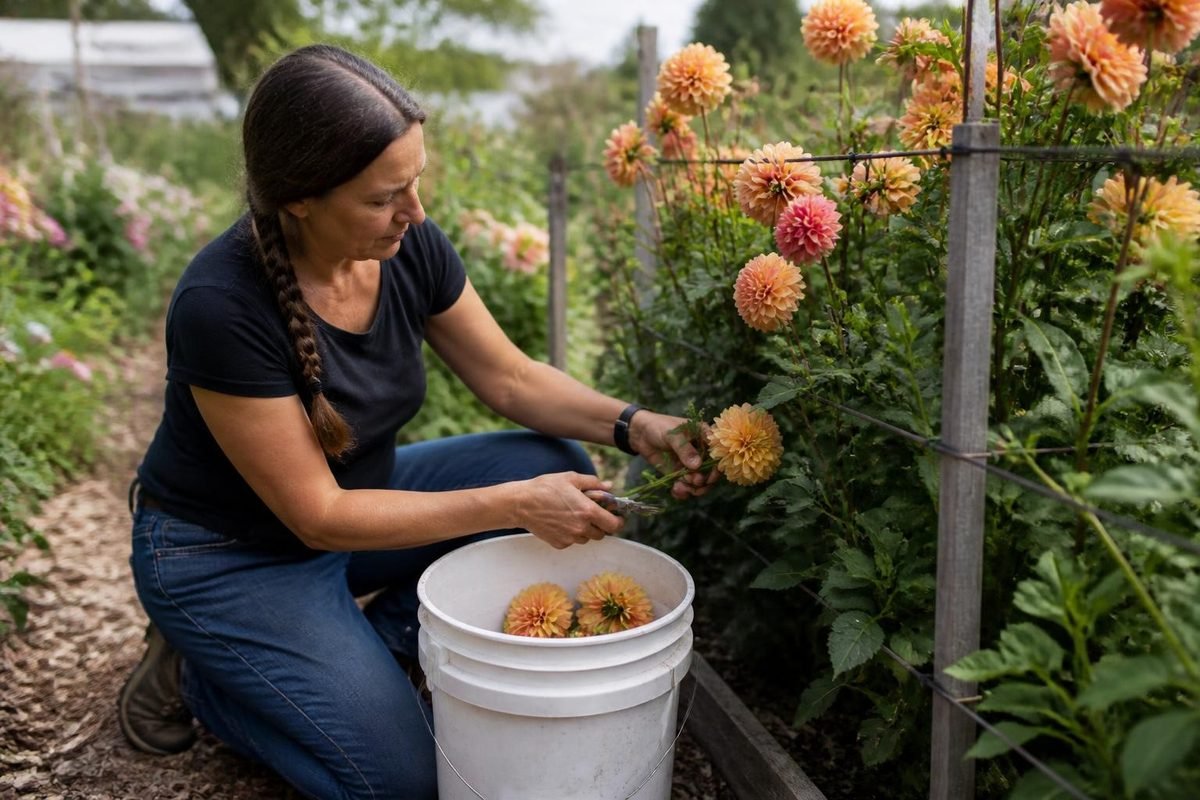
A low-waste dahlia cutting garden starts with flowers you genuinely want to use, healthy plants, and supplies you can reuse. Regular, careful cutting and sensible tuber storage help you enjoy blooms without creating unnecessary waste.
Make the bed useful from the start
Begin with a small selection of varieties instead of planting more flowers than you can use. Think about the colors and flower sizes you enjoy, along with stem length, which affects how well a bloom suits an arrangement. Single dahlias have open centers where visiting insects can reach pollen; other forms bring different shapes to a vase.
Pick a sunny spot with soil that drains well. Leave enough room for air to pass between leaves, following the spacing advice for each variety. Crowded dahlias are harder to reach when cutting and may be more difficult to keep in good condition.
Wait until frost danger has passed and the soil has warmed before planting tubers. Put supports in at the same time: it is easier to set stakes before roots and stems spread through the bed. Check reused stakes and soft ties for damage, then keep them for another season if they remain sound.
A few straightforward choices can limit extra materials:
- Work compost into the soil instead of buying more supplies than the bed requires.
- Use stakes, ties, and buckets that can serve again.
- Mark varieties with labels you can reuse.
- Gather rainwater if local rules and conditions make this suitable.
Keep plants productive and make use of blooms
Water thoroughly when the soil is dry enough to need it, aiming the water at the base of each plant. Mulch helps the soil retain moisture and can reduce weeds. Keep the mulch slightly clear of the stems so it does not sit piled against them.
Removing the growing tip from a young dahlia encourages it to branch, which can mean more stems for cutting. As the plant grows, tie it to its support. Take off faded flowers too, so the plant can direct energy toward making more blooms.
Pick flowers once they are open and still look fresh, because dahlias do not open much further after being cut. Use clean, sharp snips and take a stem long enough for your intended use. Put each stem into clean water soon after cutting, and remove any leaves that would sit underwater.
Harvest only the flowers you can use or pass on. Leaving some in the garden gives you blooms to enjoy there and keeps open-centered flowers available to insects. Healthy foliage and faded blooms can be composted. If you cannot be sure your home compost pile will destroy a disease, keep affected material out of it.
Once frost has blackened the foliage, cut the stems back. In cold regions, lift the tubers and store them somewhere cool and frost-free. Check during storage for rot or shriveling. In mild places with well-drained soil, some gardeners leave tubers in the ground, but wet winter soil may make them rot. Replant tubers that remain sound in spring.
Questions about growing dahlias
Will dahlias grow in pots?
Yes. Select a container with drainage holes and choose a variety that suits its size. Pots may dry out faster than garden soil, so container-grown dahlias can need watering more often.
Is it possible to split stored tubers?
Yes. Each division that can grow needs part of the crown with a growing point, often called an eye. Separate the tubers carefully and throw away any pieces that are soft or rotten.
Further reading: how bouquets change a room